
Six steps, one careful pour.
A coating job goes from the first call to the final walk-through in six steps. Here is exactly what happens, in order, and what you can do to help.
Follow the wet edge.
- 01
Call, text or send photos
Tell us what you have and send a few pictures. A real person answers and gives you a first idea of what is needed.
- 02
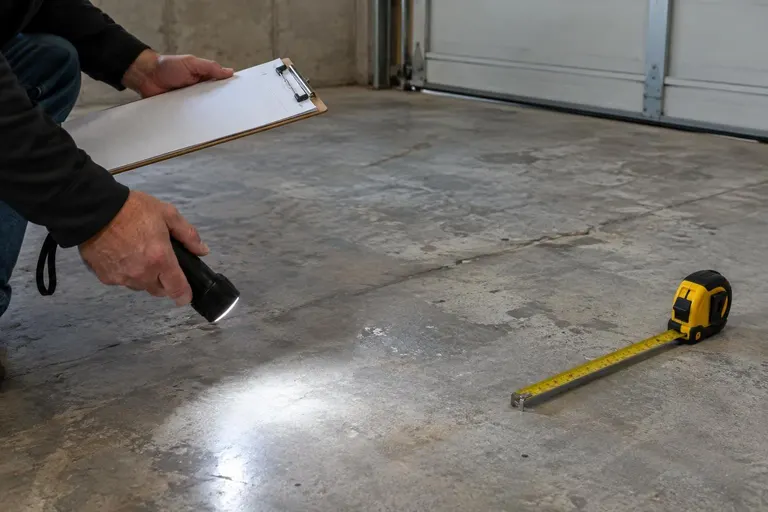
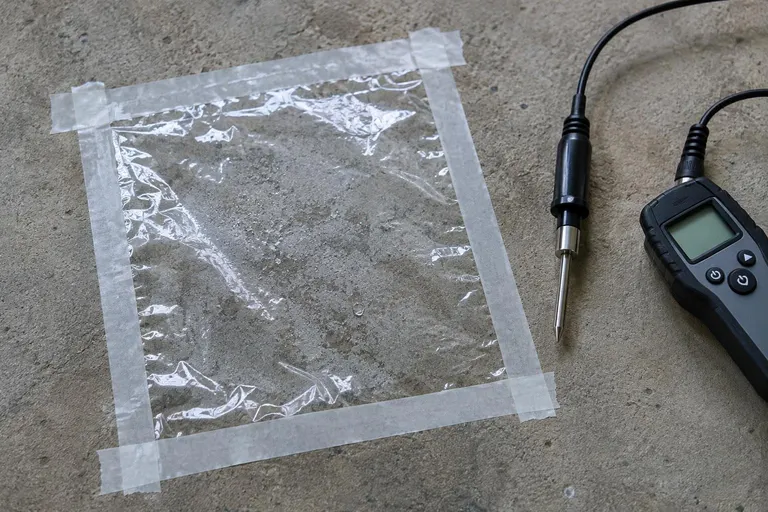
We walk the slab and test it
We look at cracks, stains, old coatings and drainage, and test for moisture, so the plan is based on the slab you actually have.
- 03
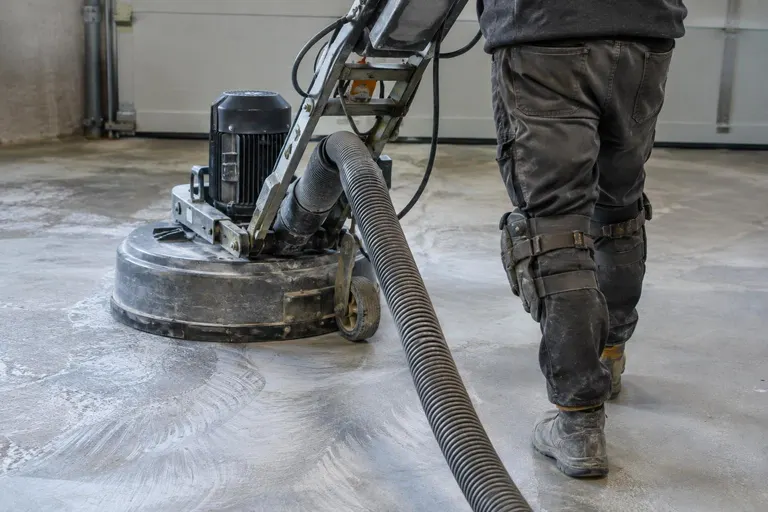
Grind and repair
Diamond grinding opens the surface and removes old sealers. Cracks, pits and joints are filled and leveled.
- 04
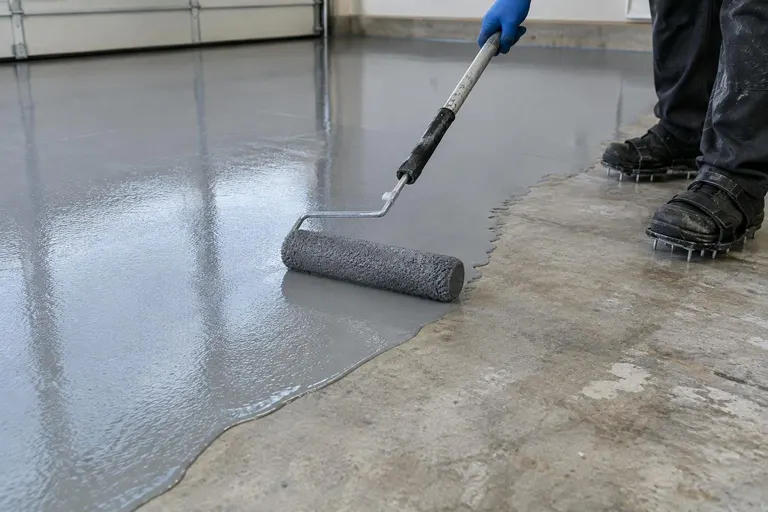
Prime and roll the base coat
Primer and base coat go on in sections so the wet edge stays alive, with the color you chose.
- 05
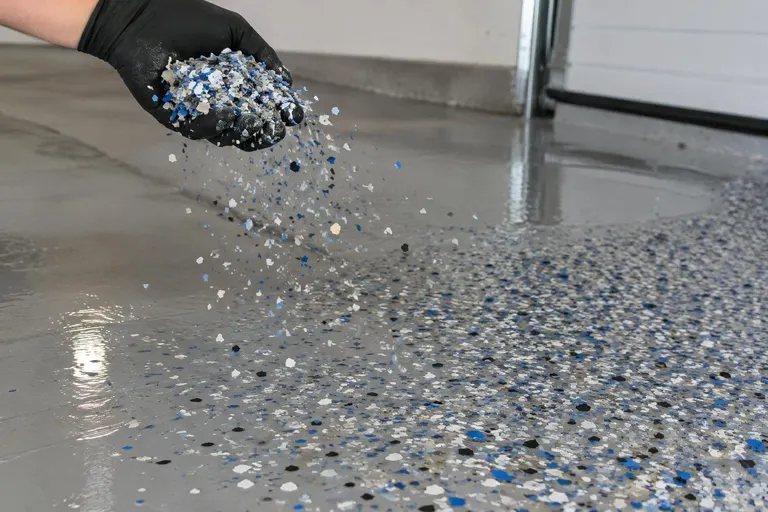
Broadcast the color
Flakes, quartz or metallic pigment go in while the base is wet. Loose chips are scraped away and the floor is vacuumed.
- 06
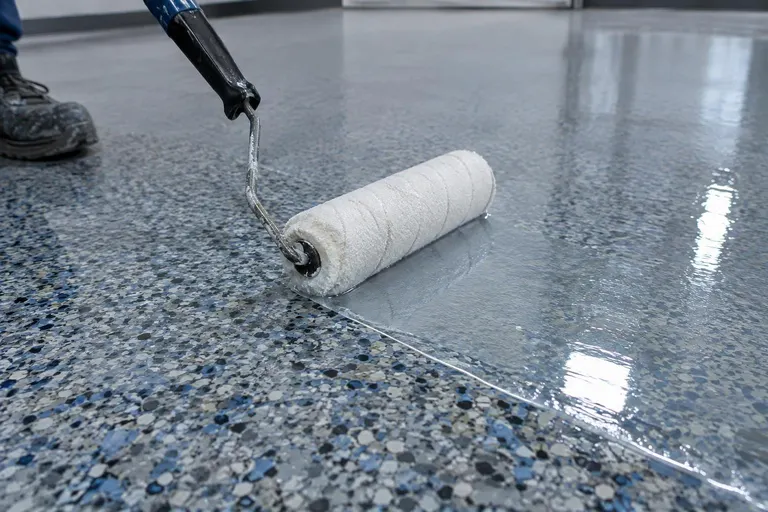
Seal it, cure it, walk it
Clear topcoats lock in the finish, then we go over the cure schedule and walk the floor with you.
Layer by layer.
Scroll to see what each step adds to the floor.
- 01
Start with the bare slab
Concrete is porous, dusty and full of history: oil, old sealer, hairline cracks. Nothing goes on until we know what is really there.
Ask: what is on the slab now? - 02
Diamond-grind the surface
Grinding strips the weak top layer and old coatings, and leaves a clean profile that a coating can grip.
Ask: how will the surface be prepared? - 03
Repair and prime
Cracks and pits are filled and leveled. A primer soaks in and, when a moisture test calls for it, blocks vapor from below.
Ask: was the slab tested for moisture? - 04
Roll the base coat
The base coat sets the color and builds thickness. It is rolled in sections so the edge stays wet.
Ask: how many coats are in the system? - 05
Broadcast the color
Decorative flake, quartz or metallic pigment goes in while the base is wet, then loose chips are scraped away.
Ask: can I see a sample board? - 06
Seal it and let it cure
Clear topcoats lock the color in, add gloss and traction and protect against tires, salt and sun. Then comes the cure schedule.
Ask: when can I walk, load and park?
Your quick prep list.
- Take a few photos of the whole floor and close-ups of cracks and stains
- Measure the width and length, or note the number of cars the garage holds
- Note any history of water, leaks, old paint or sealers
- Think about the look you like, and try the Flake Blend Mixer
- Clear the area, or tell us what is hard to move
Six promises we keep.
Prep before polish
Every floor is ground, repaired and tested before a coating is chosen, and you hear what we found.
No surprises
The scope, the layers, the price and the cure schedule are written down before work begins.
Honest advice
If a slab is a poor candidate or a simpler fix will do, we tell you.
A clean site
Dust control, masked edges and a swept floor at the end of every day.
A cure plan
You get clear dates for walking, light use and parking.
A real person
Call or text and someone who knows your job answers.
Process questions
How do I get a price for a coating?
Fill in the form on any page, or call or text 615-431-3789. A few photos and the size of the area are often enough for a first number, and larger or trickier jobs start with a short visit. You get a written scope and price before any work begins.
How long does a garage floor coating take?
Many garage floors take two to three days from grinding to a finished topcoat, then a short cure before cars come back. Weather, humidity and the system chosen change the timing, and we give you a written schedule.
When can I walk or park on a new coating?
Foot traffic usually comes first, then light use, then cars after the cure time for the system. Cold or damp weather slows the cure. Our Project Timeline shows typical windows, and your written schedule gives the exact ones.
Do I need to move everything out?
For garages and rooms, yes, the floor needs to be clear. We tell you what to move, and we can talk through options for heavy items. Outdoors, we ask you to clear furniture and plants from the work area.
Start with the easy part.
Call, text a photo or fill in the form. We look, plan, price and confirm before any work begins.